

1649 - Execution of Charles I
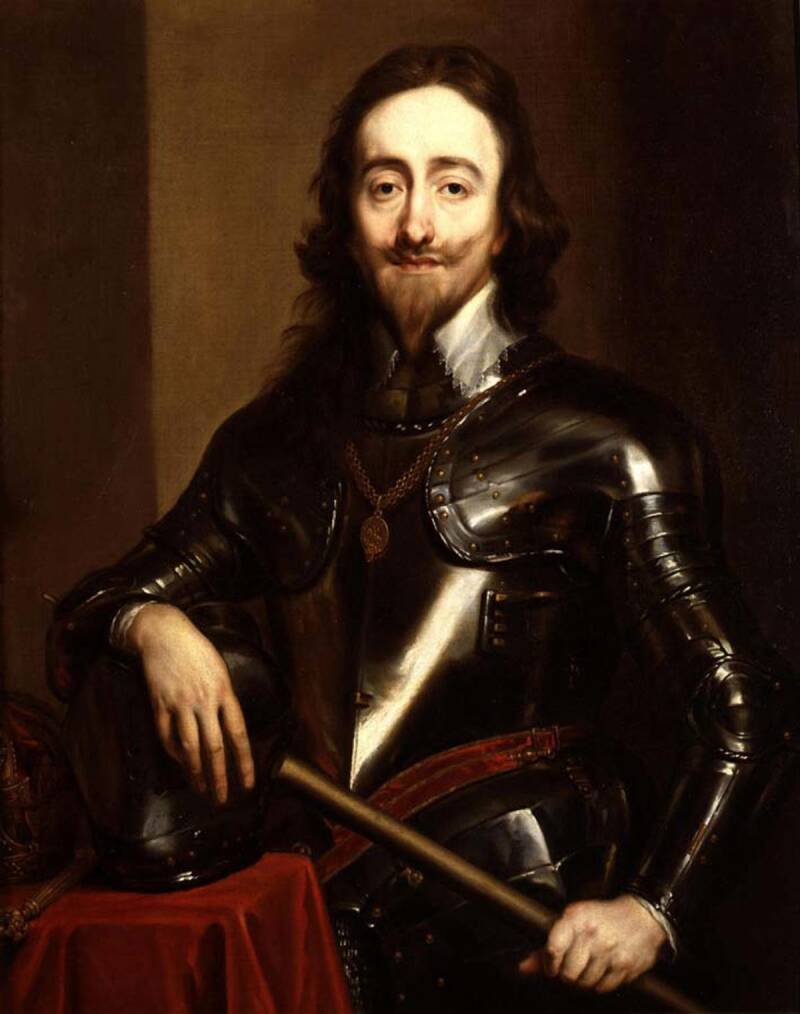
Charles I was the king of England, Scotland, and Ireland from 1625 to 1649. He believed in the “divine right of kings,” meaning his power came from God and not from Parliament. This caused serious conflict with Parliament and eventually led to the English Civil War.
Charles I was executed in 1649 after years of conflict between the monarchy and Parliament during the English Civil War, which he lost.
He had been captured by Parliamentary forces and was put on trial for treason, accused of acting against his own people and authority.
The trial took place in January 1649, and Charles I refused to accept the legitimacy of the court.
Despite this, he was found guilty and sentenced to death. He was publicly executed in London outside the Banqueting House in Whitehall.
His execution was the first of a reigning English monarch that had been put to death.
It marked a dramatic break in British history and led to the temporary abolition of the monarchy.
England became a republic known as the Commonwealth, led by Oliver Cromwell.
Although the monarchy was restored in 1660 with Charles II, the execution of Charles I had a lasting impact.
It significantly changed the relationship between the crown and Parliament and is seen as a key moment in the development of constitutional monarchy in Britain.
1660-1685 - Charles II’s Affairs

Charles II is often remembered for both his political role and his many personal relationships, which were widely known at the time.
After the monarchy was restored in 1660, Charles II returned from exile and became king. His court was famous for being more relaxed and lively compared to earlier rulers. He had no legitimate children with his wife, Catherine of Braganza, but he had many mistresses and a number of illegitimate children, several of whom he acknowledged and gave titles or positions. Because of this, he is sometimes called the “Merry Monarch”.
Politically, his reign was relatively stable compared to earlier civil conflict, but it also included tensions with Parliament and religious disputes.
His personal life, especially his relationships, became a well-known part of his public image and legacy.
Erstelle deine eigene Website mit Webador